.jpg)
Companion plants are quite amazing. You're going to love this fifth article in my series about companion plant bundles. Not only does it contain many of our favorite plants to eat and grow in a vegetable garden, but it combines three complete plant bundles into one!
Yes, you can grow the three plant bundles in this article separately, or you can combine two of them together, or all three, and they will merge together into a perfect blend of gardening bliss.
Introduction to Companions Plants in Bundles
Although the plants in each planting bundle are geared specifically to benefit one key crop, by combining the others, we are not detracting from the key crops in any way. Including a lot of plant diversity is a great way to fight off diseases, improve soil fertility, deter pests, and usher in the much needed pollinators. Some people swear that companion plants can even enhance the flavor, texture, and ripeness of vegetables.
I would love to know if anyone has actually studied this, so let me know in the comments below. My research is based entirely on the suggested companion planting charts that I've looked at, and I cannot guarantee results of any kind. The Bundle Planting method is my own idea I am developing to maximize the variety of crops I can harvest in various small plots for a backyard hobby gardener.

The collaboration of plants described in this article, I have lovingly illustrated in colored ink drawings for you to enjoy. It works as my own inspiration and vision for the garden plot I will be using. It can also be fun to look at the illustrations to practice identifying the vegetables by the various clues of shape, color, and size.
The Beans, Lettuce, and Corn Bundles
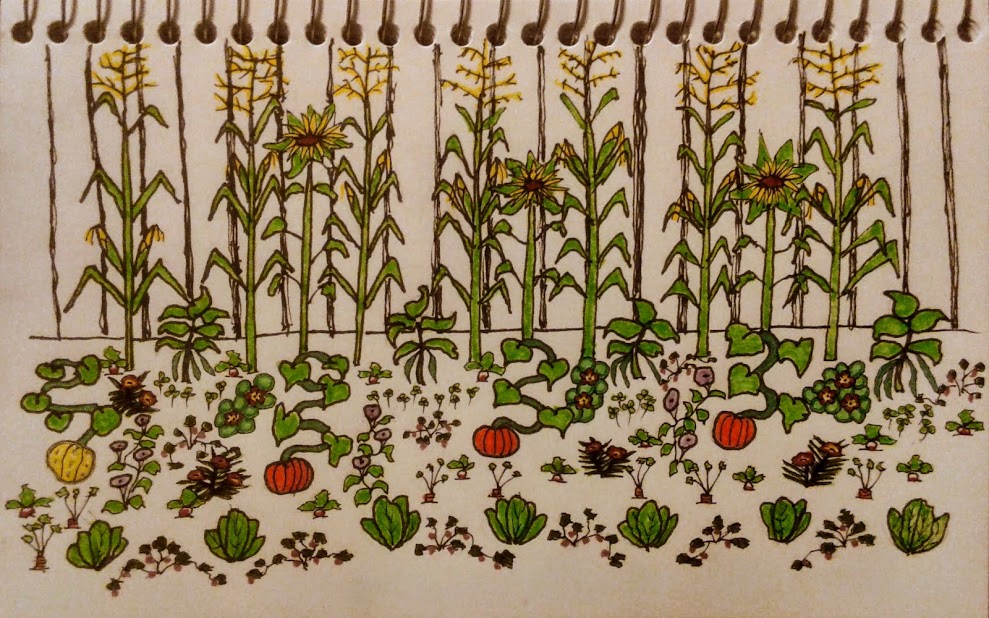
As I stated above, these three bundles are designed to help benefit one key crop specifically, and they also have the ability to grow next to the other two bundles to not be hindered in any way. So feel free to combine all plants in these three bundles if you so desire.
The combination of all three bundles might look like the illustration above.
The Beans Bundle
Beans come in many different varieties, and I am still learning a lot about how they grow and taste, and what their needs are. I like to grow green bean varieties specifically, which can be eaten raw, or cooked whole with the pod included. Alternatively, beans can be dried and reconstituted in hot water to be used in soups. When dried, they are also very easy to store and save to be used as seeds for next year.
I think it is important to pay attention to seed labels to find out if the bean is a pole type or bush bean type, as this will determine how much the plant will vine up vertically and cling to other nearby plants. Sunflowers and Corn can help hold up a pole bean if the plants are tall and strong enough. Sometimes additional support poles, wires, or cages might also be needed to help hold climbing plants upright.
(*) Plants marked with an asterisk may be included, but I am choosing to omit them in my garden plan this year. That is why they do not appear in my above illustration.
Beans Super Companions
All of these get a super boost by being planted within the Beans Bundle.
- Beans
- Beats*
- Corn
- Radish
- Strawberries
The Lettuce Bundle and Corn Bundle can be added, for increased benefits for growing Beans.
The Lettuce Bundle
Lettuce of any variety can be the star crop of this plant bundle. This year I am growing Bibb lettuce and a Eiffel Tower Romaine lettuce for the first time. Lettuce tends to grow very quickly in warm temperatures, and it will bolt quickly on a hot dry day. Once it bolts, it stops producing sweet young leaves, and the old leaves will start to change color and turn bitter. At this point it is better to remove the old lettuce and plant a new young lettuce plant in its place to have a continuous harvest of sweet lettuce leaves for the rest of the growing season.
Lettuce benefits from plants that provide shade, humidity, cooling, and anything that deters pests. Pluck off caterpillars hiding under leaves in the mornings and look around with a flashlight at night for slugs, or bait them with a beer trap. Lettuce will always adore the cool, cleansing refreshment of rain in Spring and Fall, as long as the soil drains quickly.
Lettuce Super Companions
All of these get a super boost by being planted within the Lettuce Bundle.
- Carrots
- Cucumber*
- Lettuce
- Radish
- Strawberry
The Beans Bundle and Corn Bundle can be added, for increased benefits for growing Lettuce.
The Corn Bundle
Who doesn't love golden sweet corn? With butter and salt, nearly every child in the family will happily gobble up an entire ear of this yellow kerneled vegetable. Plus, it is one of the easiest vegetables to cook simply by boiling in water, and it tastes as good as the finest chefs can prepare it. Other varieties of corn can be grown for the dried kernels which may be heated to make popcorn. Some people grow corn and grind it into a flour, such as for making tortillas.
Corn is known for being a heavy feeder, which means that it wants to be constantly fed excessive amounts of fertilizer through the entire growing season so that it never runs out. Rich compost, fish fertilizers, and livestock manure are some options that are traditionally tilled into the top layer of soil where corn will be grown. Corn should also be grown in a large patch, because the ears will not develop unless the pollen from above is carried by the wind frequently to fall onto the silk hairs between the leaves.
Corn Super Companions
All of these get a super boost by being planted within the Corn Bundle.
- Beans
- Corn
- Cucumber*
- Melon
- Pumpkin
- Squash*
- Sunflower
The Beans Bundle and Lettuce Bundle can be added, for increased benefits for growing Corn.
Corn Additional Companions
These ones should grow fine, but aren't super-boosted by any of the others nearby.
- Clover
- Marigold
- Morning Glory
- Nasturtium
Include these nearby to give added benefits to the health and growth of delicious corn.
Note: Since there are no sacrificial plants in any of these plant bundles, feel free to arrange plantings in any way that you like.
Site Location
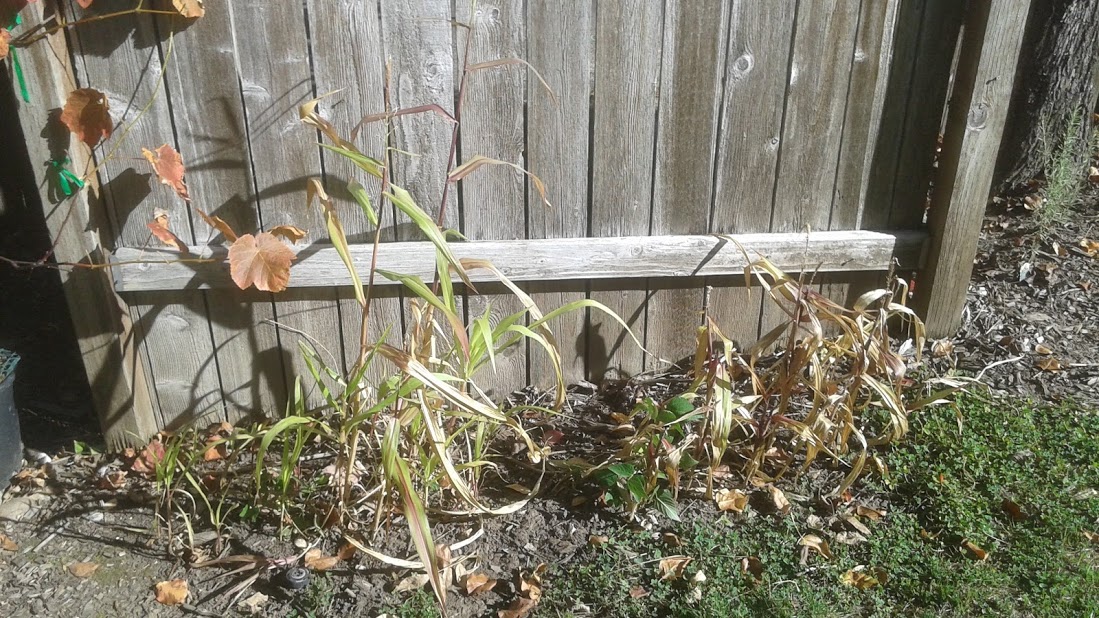
Pictured above is the fence area of my garden where I learned that most of my tall sun-loving Summer crops seem to grow best. Taller plants receive more than 8 hours of light in a day.
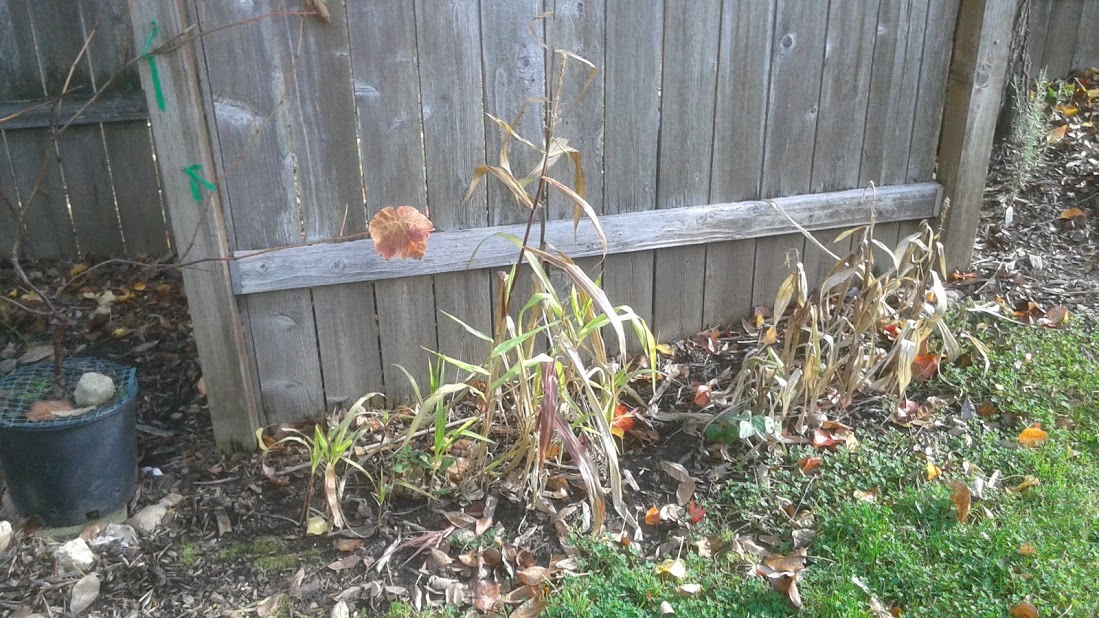
These photos show what my corn from last year looked like in late fall. I did not use nearly enough fertilizer, and did not have a dense enough group of corn to produce any edible ears to eat.
I like this piece of land because it is slightly sloped, allowing water to irrigate through easily. It keeps the ground from becoming waterlogged after a major rainstorm. One possible detriment to this area is the nearby flowering pear tree, visible to the right, which has roots that might be stealing the nutrients from the deepest areas of the soil.
As much as I would prefer to garden with a no-till method, I am thinking it might be best to dig out any new tree roots I find in the top 6-8 inches. I am also considering adding a manure type to thickly rake into the top layer of soil. Helping to sustain the corn grow into full maturity before Autumn winds return is the only way to ensure it has time to ripen before it withers. Last year I only used my own homemade leaf-mold type compost and handfuls of organic compost, and that did not seem to provide enough green fertilizer to feed the soil.
Currently I am working on starting lettuce indoors, and some of them have already started to sprout in my little peat pots. I need to get the lettuce to about four inches in size before I incorporate them into this site, or else the slugs will tear apart the smallest ones overnight. It is the start of Spring, but the last frost has not yet passed. Fortunately Lettuce can be grown early, and does not mind the cold, which is why I am working on growing it first.
Radish and Corn is also ready to start. I like to sow these directly into the soil, starting even during the coldest months. I use a plastic sheet to cover my freshly sown soil, and this blocks out some of the slugs and all of the birds and squirrels. In an upcoming article, I will share some of the strategies I use to get these off to a good start.
My strawberries in the front yard did not produce many new plants last year, so I may need to purchase a few new plants this year to add into this site for my new garden plan. Perhaps I can find one of my gardening friends, and ask if they have any extras they want to get rid of. I'm not looking for berries this year, just the plants to provide beneficial effects.
Clover grows wild in the lawn nearby this site. I can also encourage more clover to cover the soil by adding some clover seeds. I have a big shaker full of clover seeds, and they grow very fast in our clay soil and wet climate.
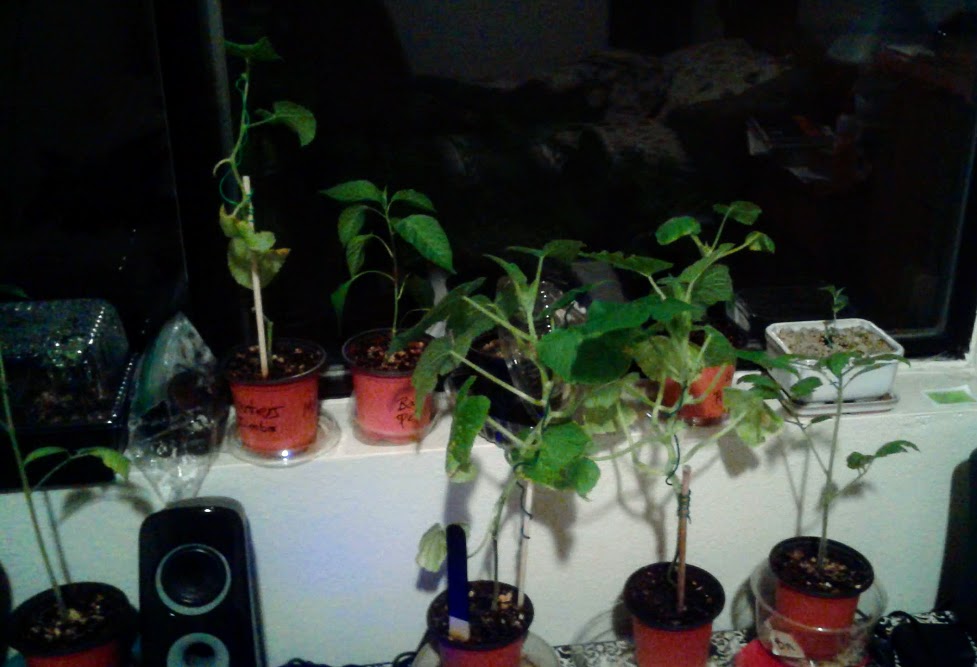
Melon and Pumpkin, I have four plants so far growing indoors that are looking healthy. I have been trying for years to get a pumpkin plant to produce fruit, and I still have hope that I can do it some day. My crop usually gets ruined by poor soil, transplant stress/slow-growth, slugs, and lack of sunlight in other places I have tried to grow it.
Last year I also protected my pumpkin vines with a big plastic cage, and that helped keep the squirrels from attacking them like they do, but I'm not sure how I will be able to protect them this year in this plot with the corn coming up through it. Maybe I can use the cage off on the far side to protect two or three pumpkin vines. I am going to have to work on sprouting a few more of these plants to increase my odds of success if a critter catastrophe strikes. They are such space hogs indoors! Wish they would slow down their growth a bit. That's why succession planting is so important. The plan is to keep these indoors for most of Spring, and wait until night temperatures remain warm. Maybe June.
Corn also needs these same warm summer temperatures as pumpkin, and so I'll be planting these seeds directly into the ground in late Spring. Corn grows so fast, it doesn't really need to be started indoors as long as the soil is super fertilized. Beans and Sunflower, I'll be using the same strategy as Corn to get them going. For added protection, I could cover the seedlings with clear cups and milk jugs to block animals from eating the tender sprouts. Birds also dig in the soil for seeds and worms, but can't get through plastic barriers.
All the other plants I am going to have to plan the upcoming weeks of Spring to get more plants started indoors. Lots of lettuce and all of the flowers (Nasturtium, Marigold, Morning Glory).
Illustration
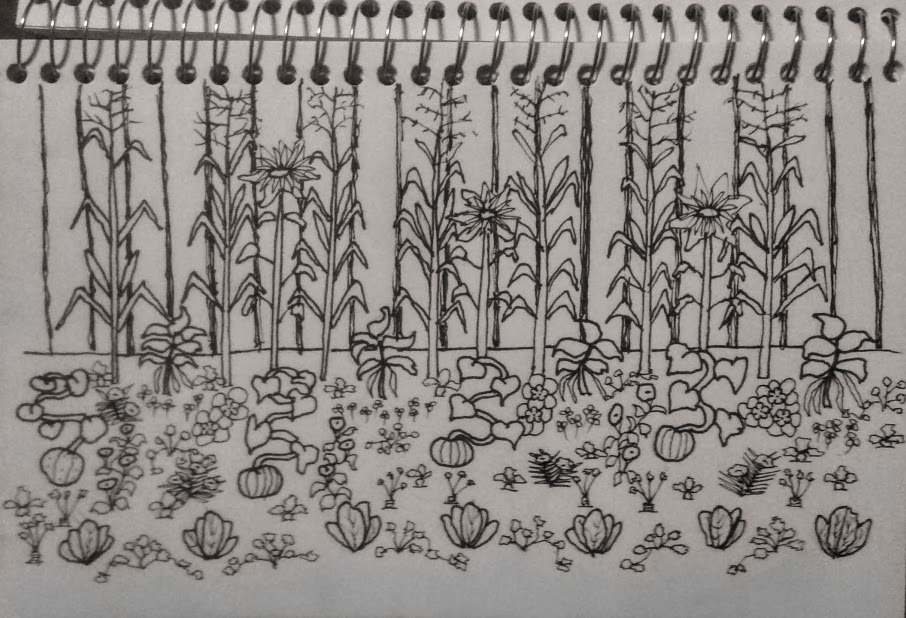
This image was drawn in pencil, and later inked in pen.
Markers were used to color in the image. Metallic green ink gel pens also added for special effect.
Anybody else enjoy coloring? Feel free to click the image for a full-scale view. I swear, coloring those pumpkins orange is chicken soup for the soul. Five minutes with a marker feels better than church on Sunday morning, let me tell ya!
Be sure to check out all of the articles in this companion planting series:
- 1: Companion Plants Illustration: The Peas Bundle
- 2: Companion Plants Illustration: The Brassicals Bundle
- 3: Companion Plants Illustration: The Carrot Bundle
- 4: Companion Plants Illustration: The Tomato Bundle
Coming Soon!
I've got one more Companion Planting illustration I'll be sharing, but it's not quite finished yet. Still have to do some more sketching, inking, and coloring.
- Apple/Fruit Trees Bundle
Thank you for checking out my hand-drawn art illustrations. May it inspire you to grow and thrive in all that you aspire to do.
#clover #bean #beans #sunflower #sunflowers #carrot #carrots #beet #beets #cucumber #squash #pumpkin #morning-glory #strawberry #strawberries #melon #radish #radishes #lettuce #nasturtium #marigold #marigolds #propagation #companion-planting #vegetable-garden #art #markers #ink #ink-pen #ink-illustration