Nah, this is not a post about sex. Or not entirely. We will talk about acting like you are too sexy when you actually doubt it. But first things first. We will get there in no time :)
After we had discussed the good (adaptive) ways of dealing with stress, last time I invited you to take a closer look into some of the behaviors that are… well, let’s call them trouble-makers. We talked about the avoidant coping style and its many faces.
This article is about something that we all do now and then when we feel inadequate or threaten in some way. It is called overcompensation. The word speaks for itself: you try to compensate for something … and you overstep.
And here comes the sexy part. A very common and relatively harmless overcompensation is when you feel insecure but you play it too cocky. Even if you don’t do it now, I bet you did it in high school. Oh, Gosh, teenage years could be so embarrassing! Aaaand cut. That was the sexy part. But if you would like to read more about sex and embarrassing teenage years you can check @alexander.alexis great list of articles :)

Playing too sexy (or in other words - demonstrating high self-esteem to cover low self-esteem) is not such a big deal and happens to everyone at some point in their life. However, things could get a little bit ugly when in order to overcompensate one’s feeling of inadequateness he or she reacts in an aggressive or hostile way. As I mentioned in my previous articles, a stressful situation is one in which we feel threatened. In such circumstances, it is common for many people to counterattack in order to protect themselves. It is completely understandable – this is a classic fight or flight mode. Nevertheless, sometimes we only interpret a situation as extremely threatening (e.g. when we overgeneralize or catastrophize) while in reality it isn’t. Furthermore, being aggressive is not the smartest thing to do in general.
Now, I can hear you asking: “What is she talking about?" OK, you are right. Let’s stop theorizing and see an example.
I had a funny experience the other day in the supermarket. I bought a low-priced bread. I noticed that the lady at the pay desk added it manually into the bill and didn’t pay attention to the low-priced label on it. I politely ask her if the price she manually added was correct. She realized she had made a mistake. However, instead of acting like a mature individual and apologizing for it, she counterattacked. She raised her voice a little and said I didn’t put the bread right on the pay desk so that she could see the low-priced label. Obviously, this was what she was paid for – working on the pay-desk and checking the price-tags. Her argument was inappropriate. She felt threated and responded in a maladaptive way which could have made things worse. For example, I could have made a complaint to the manager. I decided that I didn’t want to get into meaningless arguments and said nothing. But you never know what is going to happen with the next clients and what their reaction would be :)
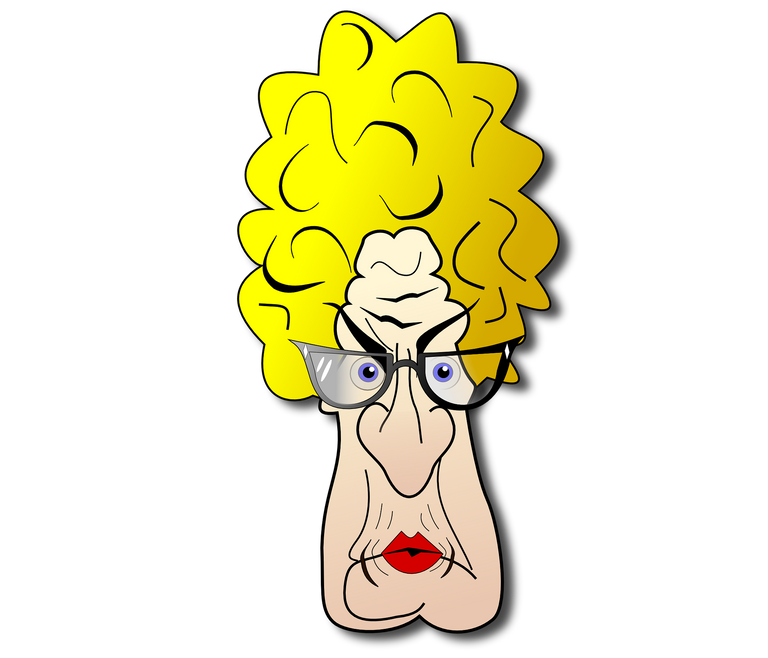
Counterattacks could be represented by defying, abusing, blaming, attacking, or criticizing others. (3) Actually, it is the opposite behavior of accepting responsibility. This was what the cashier did – instead of taking responsibility and apologizing for her honest mistake, she counterattacked.
Now, if you think that you got it and there is no way you will miss to notice it when someone is overcompensating, let me disappoint you and say that that is not all of it. Overcompensation has another variation called Excessive recognition and status seeking (3).
Now, before you start judging yourself, it is important to state that we all seek recognition and feel good when people appreciate us. But it gets inappropriate when this is the only purpose we see in doing things. Some people are motivated only by the recognition of others and they demand it at any price. This could be a real deal breaker in relationships or at the workplace.
Let’s see an example. A colleague at work offered their help when they saw you struggling with deadlines. However, the next day they start rolling eyes, sulking and giving you “I will kill you” looks out of nowhere. It turns out that they feel that you didn’t thank and praise them enough for giving you a hand. You wonder how is that so? Let’s see. What did you do first thing in the morning? You had a coffee with the others instead of running to your boss telling him about their immediate unselfish reaction the other day?! “Thank you” is never enough! What kind of person are you?!?!?!?!
Now you get my point?
Venting
Venting is a process of discharging your negative feelings by expressing them to others (1). This is an emotionally focused technique which aims a relief from the negative feelings through a loud expression. It is referred to as a maladaptive coping strategy because it focuses one’s attention at the negative events and thus preserves him or her from engaging in a proactive behavior. Furthermore, focusing on the unpleasant aspects of the situation may cause you to interpret the circumstances more negatively than if you were to remain focused on the steps to resolve them. (1).
It is always good to share your emotions. However, often people mistake venting with expressing emotions. While expressing emotions could lower your stress levels and promote health, venting tends to be focused only on negative emotions. Usually, it prevents you from engaging in more constructive behavior.
In addition, shouting at your loved one is never going to do any good. You may think that you will be relieved from the anger, the disappointment or the frustration, but this is not exactly the case. Furthermore, this kind of emotional outburst will most probably damage your relationship. Brad Bushman questions venting as a successful coping mechanism. In his study, the participants were divided into two experimental groups and two control groups. The first group of angry people (yeah, these mad psychologists made them angry first) were hitting a ball thinking of the person who angered them. As a result, they became angrier and the most aggressive amongst all other groups. The control group did exactly the same (hitting the ball) with the tiniest difference – they were thinking about getting fit. Guess what? They reported being the least angry. Hm, so Schwarzenegger, Sylvester Stallone, and The Rock are potentially very anger-free guys, heh :D

Back to the study – even doing nothing at all seemed to be better than venting the anger! I am a bit surprised by the latter but I shouldn’t be. Thinking about the events and the people who angry you is a kind of rumination. You can check a lovely post about this phenomenon by our wonderful (but lately missing) @abigail-dantes (waiting for you to come back soon, @abigail-dantes).
Now, when I think about it, I have used this kind of venting with sports, e.g. when jogging. Maybe it didn’t make me feel happier but it definitely gave me some extra fuel to run a bit further. So, at least there is a silver-lining to it. But, as it turns out, it is not a successful way to deal with what is bothering you, so next time when you do sports just think of how fit, healthy and good-looking you are going to be. At least, that’s what I am going to do ;)
There are many other constructive ways to share your feelings. You could try reflection, mindfulness, and/or cognitive reappraisal. Check my previous articles for some more stress-hacks.
So, thank you as always for spending time reading my article! Does some of this ring a bell? I will be extremely thankful if you share your thoughts on the subject.
My stress series is finally coming to an end. Next time I will publish a surprise stressless article that was made thanks to all of you who spent the time to share their thoughts. But I am not going to reveal any more details. See you soon!
PS: Please note that muscles shouldn't be central criteria when picking a husband!
Created by @insight-out, Valeria Sim.
All rights reserved.
Previous articles about Stress and Coping:
How to Cope with Stress? (Part 1) What is Stress?
How to Cope with Stress? (Part 2) Adaptive vs Maladaptive Coping Strategies
How to Cope with Stress? (Part 3) Problems and Irrational Thinking
How to Cope with Stress? (Part 4) Negative Emotions
How to cope with Stress? (Part 5) Humor and Friends
Survivng the Holidays. Psychology Christmas Special
How to Cope with Stress? (Part 6) Run and Hide
References:
- Brown, S., Westbrook, R., Challagala, G. (2005). Good Cope, Bad Cope: Adaptive and Maladaptive Coping Strategies Following a Critical Negative Work Event, Journal of Applied Psychology, Vol. 90, No 4, 792-798
- Bushman, B. (2002) Does Venting Anger Feed or Extinguish the Flame? Catharsis, Rumination, Distraction, Anger, and Aggressive Responding, Personality and Social Psychology Bulletin, Volume: 28 issue: 6, page(s): 724-731
- http://www.schematherapy.com/id71.htm
- https://www.mindful.org/what-is-mindfulness/
Images (under CC0 Creative Commons):
https://pixabay.com/photos/musician-rockstar-band-music-rock-664432/
https://pixabay.com/illustrations/old-angry-woman-person-white-face-607710/
https://pixabay.com/illustrations/man-angry-drawing-sour-face-857502/
https://pixabay.com/illustrations/gabriel-moral-illustration-art-2519845/
SteemSTEM is a community project with the goal to promote and support Science, Technology, Engineering and Mathematics on the Steem blockchain. If you wish to support the steemSTEM project you can:
Contribute STEM content using the #steemstem tag | Support steemstem authors | Join our curation trail | Visit our Discord community | Delegate SP to steemstem -++
 i love you guys and as always, i send my best healing peaceful vibrations your way.🤗🤗
